

Why cork
A material that starts in the forest,
not the factory.
Underfoot
Softer because of
how cork is built.
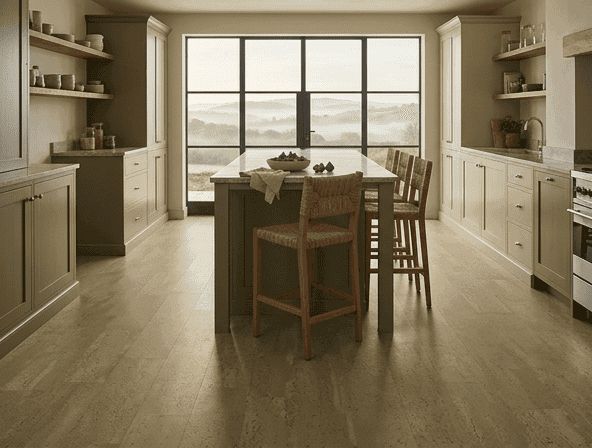
Cork is made from millions of tiny air filled cells. Granorte describes around 30 to 40 million cells in each cubic centimetre. They compress gently under pressure and return to shape, which is why cork feels less hard underfoot than tile, stone, laminate or LVT.
It is not added cushioning. It is the material itself.
Warmth
A floor that does not
feel cold first.
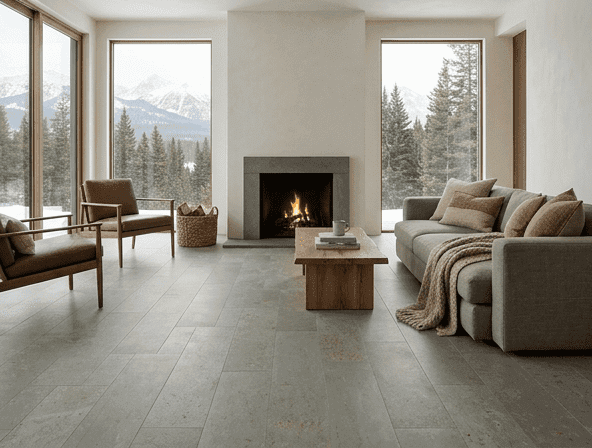
Cork is a natural insulator. The same cellular structure that softens impact also helps slow heat transfer, so the surface feels warmer to bare feet than harder floor finishes. Underfloor heating compatibility must be checked by range and installed exactly to Granorte's guidance.
Warmth is one of the quiet advantages of cork.
Sound
Footsteps feel softer.
They sound softer too.
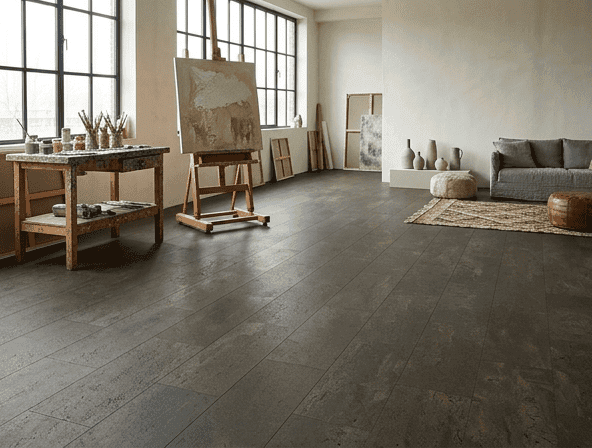
Cork helps reduce impact sound, but the number depends on the product. Naturals floating is rated up to 19dB, Designtrend 17dB and Naturals Fix 14dB. Montado shows the exact figure on each product page so the claim stays clear.
Use the product page when the number matters.
Origin
Cork is harvested from bark,
not felled trees.
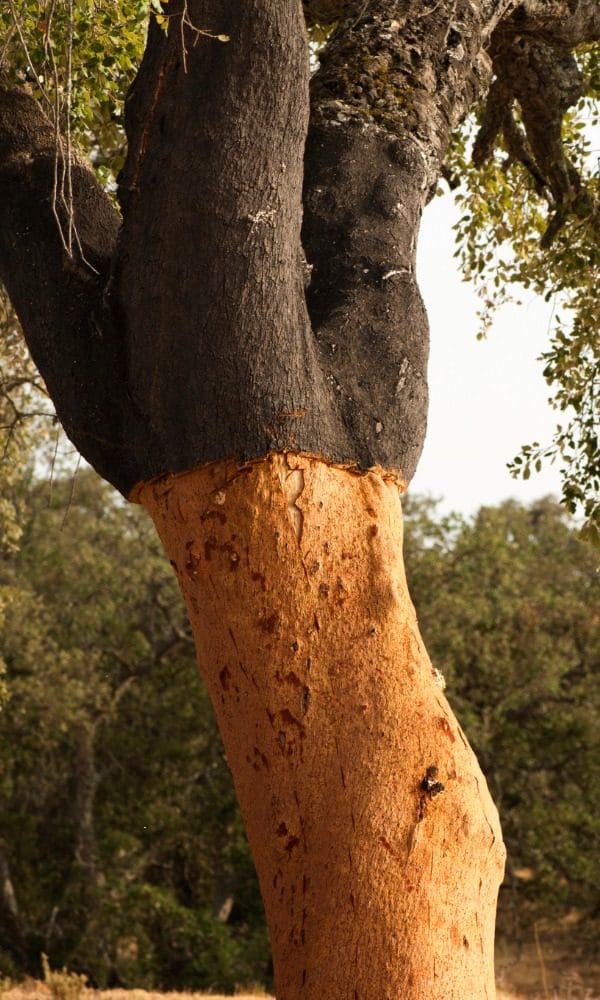
Cork comes from the bark of the cork oak. In Portugal, those landscapes are called montado. The bark is removed by skilled harvesters, then left to grow back while the tree continues living. That harvest cycle is the reason cork has such a different material story from timber, laminate or PVC based flooring.
The finished product still has product specific layers, finishes and adhesives. The harvest story belongs to the cork itself.
The details that matter.
How the materials compare.
We are honest about what cork does well and where other materials have advantages. The right floor depends on your priorities.
| Property | Cork (Montado) | Laminate | LVT |
|---|---|---|---|
| Comfort underfoot | Natural cushioning from around 40 million air cells per cm3. Absorbs impact, gentle on joints. | Hard surface. No give. Impact transfers directly into the body. | Rigid PVC. Marginally softer than laminate with underlay, but no natural cushioning. |
| Thermal insulation | Naturally warm. Does not conduct cold from the subfloor. | Cold to the touch. Conducts subfloor temperature. | Cold to the touch. Adapts to subfloor temperature quickly. |
| Sound absorption | Product specific impact sound reduction, up to 19dB on Naturals floating. | Can sound louder without suitable underlay. | Usually quieter than laminate, but product construction varies. |
| Durability | Use class and warranty vary by range, shown on each product page. | Cannot usually be repaired once damaged. | Can be susceptible to indentation from heavy furniture. |
| Moisture | Moisture-resistant (suberin). Not waterproof. Suitable for kitchens. | Poor moisture resistance. Swells and warps with water exposure. | Fully waterproof surface. Best choice for wet areas. |
| Sustainability | Cork bark is harvested without felling the cork oak. Finished product content varies by range. | Varies by manufacturer. Avoid unsupported blanket claims. | Varies by manufacturer. Avoid unsupported blanket claims. |
| Installation | Click system (Uniclic). DIY-friendly. Over existing floors. | Click system. DIY-friendly. | Click or glue-down. DIY-friendly for click. |
| Upfront cost | Higher initial investment. | Lower. Budget-friendly. | Moderate. Wide price range. |
| Replacement cycle | Warranty and expected life vary by range, shown on each product page. | Varies by product and use. | Varies by product and use. |
| Maintenance | Vacuum and damp mop. No annual sealing routine. | Vacuum and damp mop. | Vacuum and damp mop. |
| Air quality | Emissions and certifications shown by product range, not as one site wide claim. | Varies by product. Check the manufacturer data. | Varies by product. Check the manufacturer data. |
| Pet suitability | Natural cushioning supports joints. Warm surface for resting. Quiet under paws. Closest to natural ground feel. | Hard surface. No joint support. Cold. Loud under claws. | Hard PVC surface. No joint cushioning. Cold underfoot for animals. Scratch-resistant. |
Cork is not the right choice for every room or every budget. But when you compare total cost, environmental impact, and the experience of living on the floor for years, the calculation changes.
Feel it for yourself.
A sample tells you more than a website ever can.